

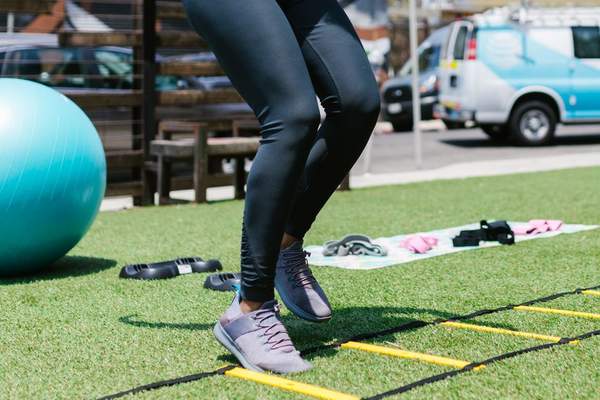
Good tennis footwork is less about looking fast and more about arriving in the right place with enough balance to hit the next ball. A player can have clean strokes and still feel rushed if the feet are late, the first step is inefficient, or recovery stops after contact. The best tennis footwork drills train the full sequence: get ready, react, move, adjust, hit, and recover.
Groundstrokes need spacing, returns depend on a quick reaction, and defensive shots become easier when the body stays organized through changes of direction. The goal is not speed for its own sake. It is to use fewer wasted steps while staying balanced enough to move again.
Start With the Split Step and First Move
The split step is the reset point between one movement and the next. As your opponent prepares to strike, use a small hop so you land in an athletic stance around the moment of contact, ready to move either way. Timing matters more than jump height. Land too early and you may become flat-footed; land too late and the ball is already traveling toward you.
Split-Step Reaction Drill
Stand near the center of the baseline. Have a partner point left or right as you perform the split step. Land, push from the outside leg, and take an explosive first step in the called direction. Move two or three steps, stop under control, then reset. Do 8 to 12 repetitions per set.
This split step tennis exercise teaches the first move from a balanced landing. Once it feels automatic, replace the hand signal with a tossed ball or live feed.
Train Lateral Movement Without Crossing Too Early
Side-to-side movement appears constantly in baseline rallies, but not every wide ball needs the same footwork. Short distances can often be covered with quick lateral steps, while wider balls may require a crossover step to gain ground faster. Training both patterns helps you avoid shuffling when you should accelerate or crossing your feet when fine control is needed.
Two-Cone Lateral Drill
Place two cones about 10 to 12 feet apart. Start in the middle, split step, move to the right cone, touch beside it, return through the middle, then move left. Keep your hips controlled enough to change direction smoothly and avoid letting the upper body sway outside the feet.
Carry a racquet and shadow a forehand at one cone and a backhand at the other. Swing only after the feet create enough space. This makes tennis movement drills about positioning, not just conditioning.
Improve Recovery After Every Shot
Many players focus on reaching the ball and forget what happens immediately afterward. Once the shot leaves your strings, recovery begins. Returning toward a central baseline position is a useful beginner reference, but the best recovery spot changes with your court position, the direction of your shot, and the opponent’s likely reply.
Hit-and-Recover Shadow Drill
Mark a home position with a cone. Start there, split step, move to a second cone placed wide, shadow a stroke, and immediately recover toward home. Repeat on both sides. From farther outside the court, use a crossover step to cover ground before settling into smaller adjustment steps.
These court recovery drills are useful for players who tend to admire their shot. Build a simple rhythm: hit, push off, recover, then split again.
Use Adjustment Steps to Fix Spacing
Fast players still miss when they arrive too close to the ball. The final steps before contact often determine whether the swing has room to work. Instead of taking one large last stride, use smaller adjustment steps as you approach the hitting zone. They help with balls that arrive at different speeds, depths, or heights.
Three-Ball Spacing Drill
Ask a partner to feed three balls to the same side with slightly different depths: one comfortable, one shorter, and one deeper. Do not try to hit harder. Focus on getting the final spacing right before each swing, then recover and split before the next feed.
Imagine two forehands landing in nearly the same area but arriving at different speeds. If you copy the same footwork for both, one contact point may feel cramped. Small adjustment steps let you keep moving until the ball sits in your preferred strike zone.
Build Tennis Agility With Four-Corner Movement
Tennis agility is the ability to accelerate, stop, change direction, and reorganize quickly. Place four markers around your starting position: left, right, forward-left, and forward-right. Have a partner call one marker at random. Split step, move to it, perform a shadow stroke, then recover.
Mix lateral, diagonal, and forward movement. Keep each work period short enough that technique remains clean. Once fatigue causes heavy steps or poor balance, the drill stops reinforcing the movement pattern you want.
Progress From Patterns to Live-Ball Footwork
Shadow drills remove the distraction of ball striking, but footwork must eventually respond to a real ball. Progress from controlled feeds to cooperative rallies and then point play. Start with alternating forehand and backhand feeds, then rally crosscourt while recovering after every shot. Finally, play points while prioritizing a balanced split step before the opponent strikes.
Related technique topics such as tennis court positioning, forehand spacing, and return-of-serve technique are natural internal linking opportunities because footwork changes with your court location and the shot you expect next.
How Often Should You Practice Footwork?
Short, focused sessions are often more useful than long sessions filled with tired repetitions. Ten to fifteen minutes can fit before hitting practice two or three times a week. Start at moderate speed, learn the pattern, and increase intensity only while your stops, first steps, and recovery remain controlled.
For faster change-of-direction work, use enough space and a suitable surface. The aim is sharper movement, not uncontrolled sprinting.
FAQ
What are the best tennis footwork drills for beginners?
Begin with split-step reactions, two-cone lateral movement, hit-and-recover shadow patterns, and simple spacing drills. They teach the core sequence without requiring advanced speed or complicated equipment.
How can I get faster to wide balls?
Improve the first push after the split step and learn when to use a crossover step instead of continuing to shuffle. Wide-ball speed comes from efficient acceleration and early recognition, not simply moving your feet faster.
Should I always recover to the center of the baseline?
No. The center is a useful beginner reference, but recovery depends on where you hit from, where your shot goes, and which replies your opponent can realistically play. Position for the next ball rather than returning mechanically to one fixed spot.
Can footwork drills improve balance on groundstrokes?
Yes. Drills that combine movement, adjustment steps, contact positioning, and recovery help you arrive with a more stable base. Better spacing also reduces the need to reach, lean, or swing while falling away from the ball.
Make Better Movement the Goal
The most useful tennis footwork drills connect preparation, movement, spacing, and recovery instead of treating each skill separately. Build the split step first, sharpen the opening step, learn efficient lateral and crossover movement, then add adjustment steps and live-ball reactions. When those patterns become automatic, you spend less energy correcting poor positioning and more time hitting from a balanced, repeatable base.
