

If you are new to cricket, choosing between Test, ODI and T20 can feel like choosing three different sports that happen to use the same bat and ball. The basic contest is identical: one side bats, the other bowls and fields, and runs decide the outcome. What changes is the time available, the number of innings, the scoring pace and the risks teams take. That makes each format suited to a different kind of viewer.
Test vs ODI vs T20 at a glance
Test cricket is the longest international format. A match can last up to five days, and each team normally has two innings. There is no fixed innings limit in overs, so teams can build scores slowly, declare an innings closed, or spend long periods trying to survive difficult bowling. A Test can be won, lost, tied or drawn.
A One Day International, usually shortened to ODI, gives each team one innings of up to 50 overs and is designed to be completed in a day. It sits between the patience of Test cricket and the urgency of T20, so tactics often change sharply from one phase of an innings to the next.
A T20 International gives each side one innings of up to 20 overs. With only 120 legal balls available, batters have less time to settle and captains have fewer overs in which to correct a bad matchup. It is the quickest of the three main international cricket formats.
How the time limit changes the cricket
The biggest difference is not simply how long you watch. Time changes what counts as a good decision. In Test cricket, leaving a dangerous delivery outside off stump can be a small victory because preserving a wicket may matter more than adding one run. Bowlers can spend several overs setting up a dismissal, while captains have time to wait for mistakes.
ODI cricket compresses that thinking. A batter cannot block indefinitely, but neither must every ball be attacked. Teams balance wicket preservation with a steady scoring rate before accelerating later. That makes the one day international a useful format for newcomers who want to see both classical batting and aggressive limited overs cricket.
T20 pushes the trade-off furthest. A quiet spell of two or three overs can change an innings, so batters look for scoring options earlier. Bowlers rely heavily on variation, changes of pace, yorkers, bouncers and matchup planning. Captains move fielders frequently because one boundary can alter the required scoring rate.
Scoring, wickets and what a good total means
Runs and wickets work the same way in all three formats, but their value changes with context. In a Test, 250 may be a strong first-innings score on a difficult pitch and a poor one on a flat surface. The pitch can evolve across several days, so batting last may be much harder than batting first.
In ODIs, teams judge scores against 50 available overs, wickets remaining and conditions. A side that starts cautiously may still finish strongly if it keeps wickets in hand. In T20, there is far less recovery time. Losing several early wickets can force a team to reduce risk, while a fast start can create room for even more aggression later.
A useful tip for a first-time viewer is to watch the required run rate during a chase. If a T20 team needs 60 from the final five overs, it needs 12 runs per over, so every dot ball increases pressure. In an ODI, the same 60 runs might be spread across ten or more overs and create a very different tactical problem.
Clothing, balls and the viewing experience
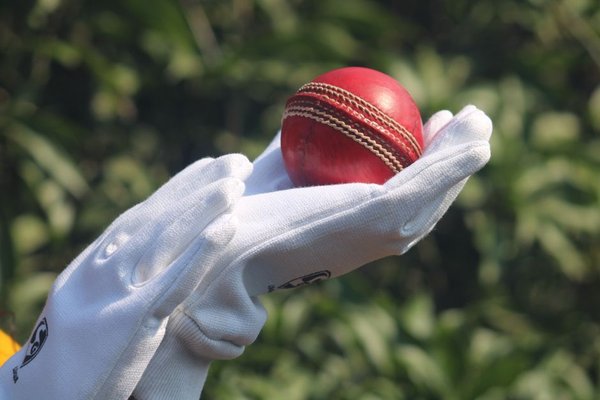
Test matches are traditionally played in white clothing. Day Tests generally use a red ball, while day-night Tests use a pink ball for better visibility under lights. ODIs and T20Is are normally played in coloured kits and use a white ball. These differences are not merely cosmetic: ball type, lighting, pitch wear and match duration can all influence how batting and bowling develop.
For spectators, Test cricket rewards long attention. The story can shift over sessions and days, with weather, fatigue and pitch deterioration becoming part of the contest. ODI cricket usually gives you a full-day arc with a clear beginning, middle and finish. T20 is easier to fit into an evening and offers frequent high-pressure moments.
Which format should a newcomer watch first?
Choose Test cricket for strategy and endurance
Start with a Test if you enjoy contests that develop slowly and do not need constant scoring. You will see more defensive technique, longer bowling spells, changing field settings and the effect of conditions over time. It is also the format where a draw is a meaningful possible result.
Choose ODI cricket for balance
Pick an ODI if you want a middle ground. Fifty overs gives batters time to build an innings, but the finite limit keeps the game moving toward a result. It is often the easiest format for understanding how risk changes through different phases of limited overs cricket.
Choose T20 for speed and immediate pressure
T20 is the easiest entry point if you have only a few hours. Boundaries, wickets and tactical changes tend to arrive quickly. The shorter format also makes individual matchups easy to notice because a captain may target a particular bowler or save one over for a specific batter.
Frequently asked questions
Which is longer, Test, ODI or T20?
Test cricket is the longest, with matches scheduled for up to five days. An ODI is a one-day match with up to 50 overs per side, while a T20 International allows up to 20 overs per side and is normally completed in a few hours.
Can a Test match end in a draw?
Yes. A Test can be drawn if the scheduled playing time ends before either team achieves a win, even when one side appears to be ahead. That possibility shapes tactics throughout the match.
What is the main difference between ODI and T20 cricket?
The main difference is innings length: 50 overs per side in an ODI and 20 in a T20I. The shorter limit generally encourages faster scoring and earlier risk-taking in T20.
Which cricket format is best for beginners?
T20 is often the most accessible if time is limited, while ODI offers the clearest balance between traditional technique and attacking play. Test cricket is rewarding once you enjoy the deeper tactical battle and longer narrative.
Choosing the format worth your time
There is no single best format because each asks a different question of the players. Test cricket asks who can adapt and endure for days. ODI cricket asks who can manage a 50-over innings while knowing when to accelerate. T20 asks who can make high-value decisions under an intense time limit. If you are deciding what to watch tonight, choose T20 for speed, ODI for balance and Test cricket when you want the fullest version of cricket’s tactical battle.
